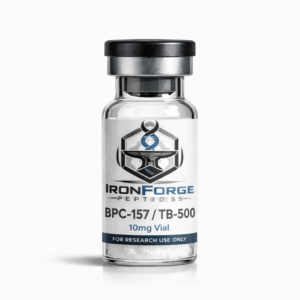

TB-500 is a synthetic peptide version of a naturally occurring protein fragment known as thymosin beta-4. Researchers are interested in it because it may play a role in tissue repair, cell migration, recovery, and blood vessel formation in damaged tissues.
Scientific Information
- Full Name: Thymosin Beta-4 Fragment / TB-500
- Structure: TB-500 is commonly described as a synthetic peptide modeled after thymosin beta-4, a naturally occurring peptide involved in cellular movement, repair signaling, and tissue remodeling.
Research & Potential Benefits
-
Tissue Repair Research:
Studies suggest thymosin beta-4 may support repair and regeneration in injured tissues. (Reference 1, 2) -
Cell Migration Support:
Research indicates it may help regulate cell migration, which is important in recovery and wound-healing processes. (Reference 2, 3) -
Angiogenesis Research:
Thymosin beta-4 has been studied for its role in supporting new blood vessel formation in healing tissue. (Reference 1, 4) -
Inflammation & Recovery Research:
Preclinical work suggests it may influence inflammatory signaling and broader recovery pathways. (Reference 2, 3)
References
- Malinda, K.M. et al. “Thymosin beta4 accelerates wound healing.” Journal of Investigative Dermatology.
- Goldstein, A.L. et al. “Thymosin β4: a multi-functional regenerative peptide.” Basic Properties and Clinical Applications.
- Treadwell, T. et al. “The regenerative peptide thymosin β4 accelerates wound healing.” Wounds.
- Smart, N. et al. “Thymosin beta4 and angiogenesis: modes of action and therapeutic potential.” Angiogenesis.
Disclaimer
For Research Use Only. Not for human consumption.